A dining room in Bangkok where fermented fish paste meets French technique, where a single bowl of gaeng som carries the memory of a grandmother's mortar and the precision of a chef who staged in Copenhagen.
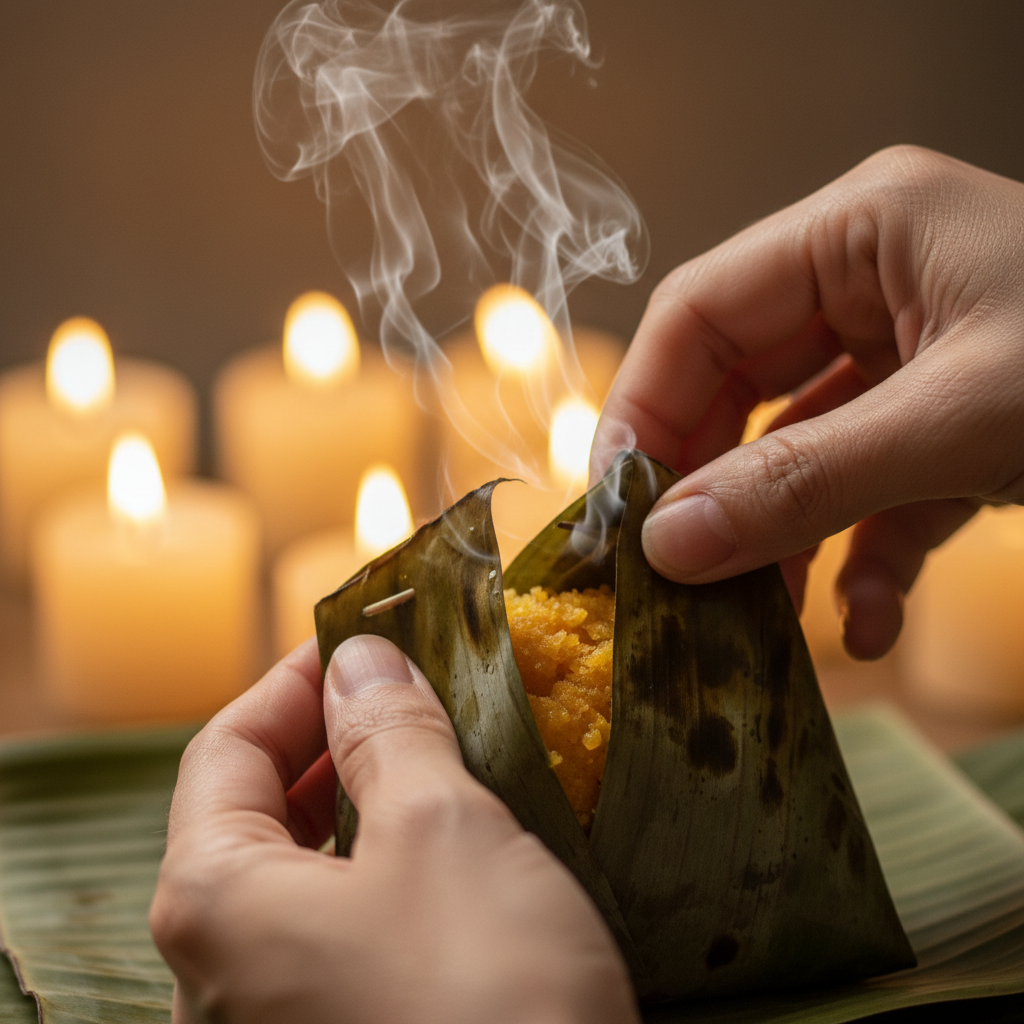
Bangkok · Est. 2024
The old recipes, served forward.
Scroll
01Fermentation
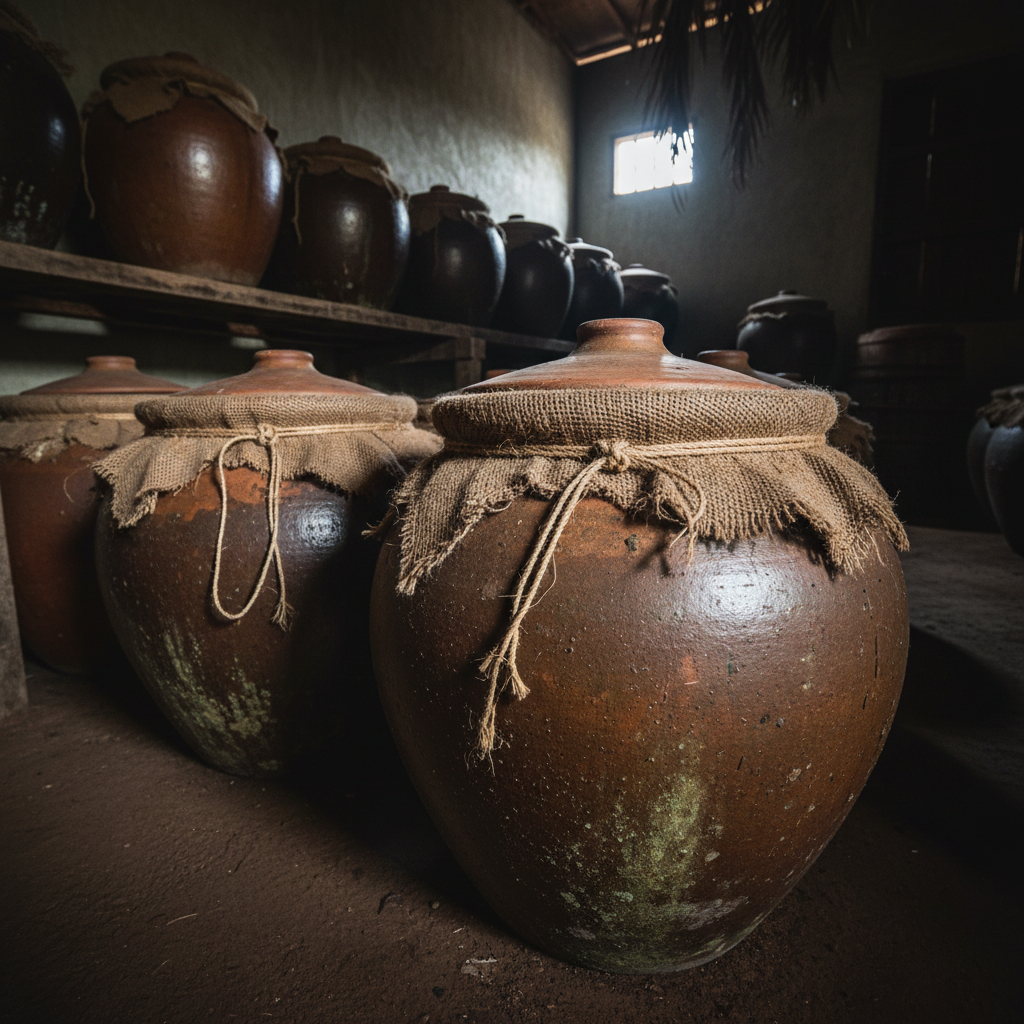
Kapi, the first ingredient.
Before there is a dish, there is a smell. Kapi — fermented shrimp paste — is the base note beneath nearly everything we cook. Ours ages for six months in hand-thrown earthenware sourced from Ratchaburi potters, sealed with cloth the way it was done before refrigeration existed. The smell is violent and honest. By the time it reaches your bowl as a whisper inside a gaeng som, it has become something else entirely: depth without a name.
02Technique
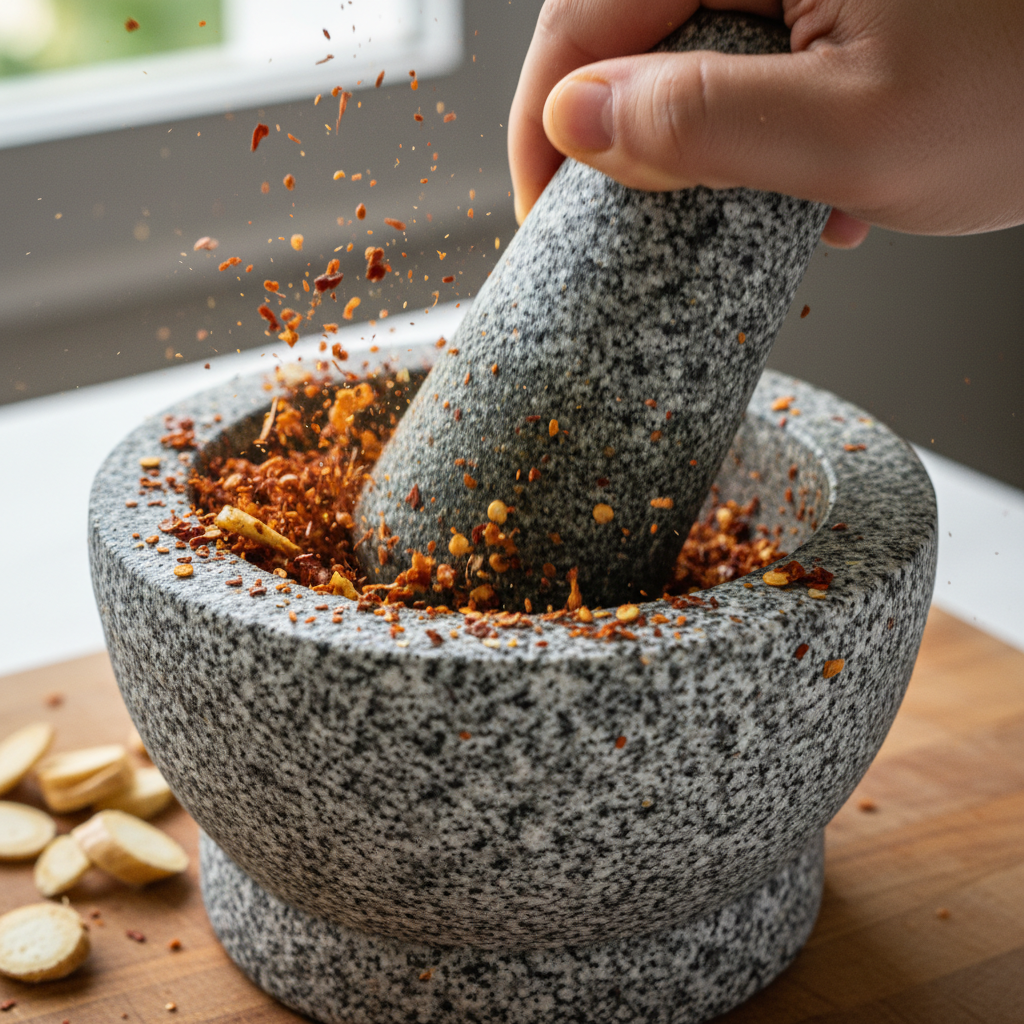
The mortar knows the recipe.
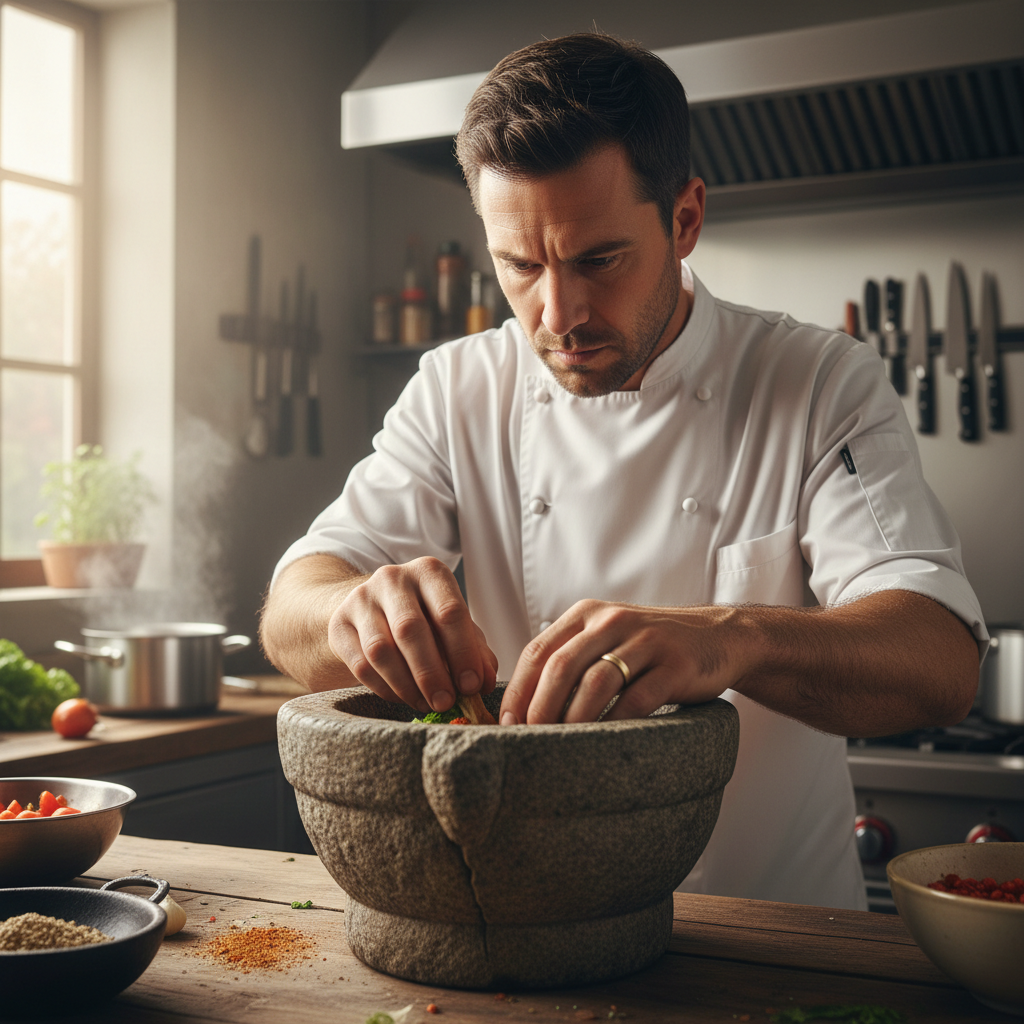
A blender produces a paste. A mortar produces a memory. The sequence matters — dried chillies first, then galangal, lemongrass, shallots, garlic, and finally kapi — each ingredient broken down before the next arrives. The stone extracts oils that a blade cannot reach. The rhythm is not decorative. It is the technique. We pound every nam prik and curry base by hand, every service. The kitchen sounds like a kitchen should.
03Fire
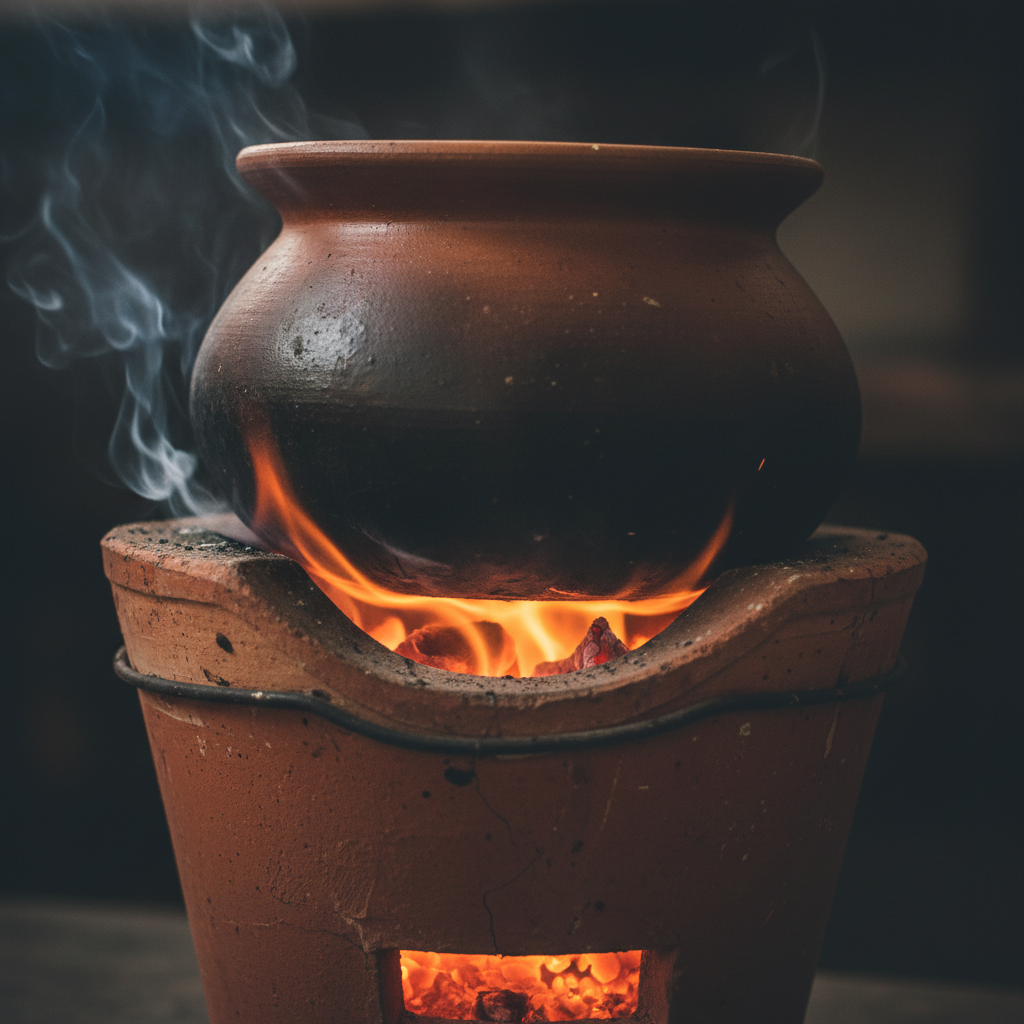
Charcoal and patience.
There is a temperature that gas cannot reach and electricity cannot approximate — the dry, even heat of hardwood charcoal at its settled centre. We use it for the dishes that require waiting: the massaman that simmers for four hours, the clay pot sticky rice that absorbs smoke as it steams. The charcoal is lychee wood from Chachoengsao. It burns long and clean. The dishes that come from it taste like something that could not have been hurried.
04The Kitchen
Nattawut Srisuk
He learned to pound before he learned to read. In his grandmother's kitchen in Ubon Ratchathani, the granite mortar was the first instrument — its rhythm the first lesson in patience. He left at eighteen, eventually staging in Copenhagen, Lyon, and Tokyo, before returning to Bangkok with a single conviction: that Thai food's complexity needs no translation. It needs precision.
At Plara, every dish begins with the question his grandmother would have asked — does this taste like somewhere? The answer is always yes. It tastes like the Mekong at dusk. Like a market at five in the morning. Like the specific weight of a clay pot left on embers overnight.
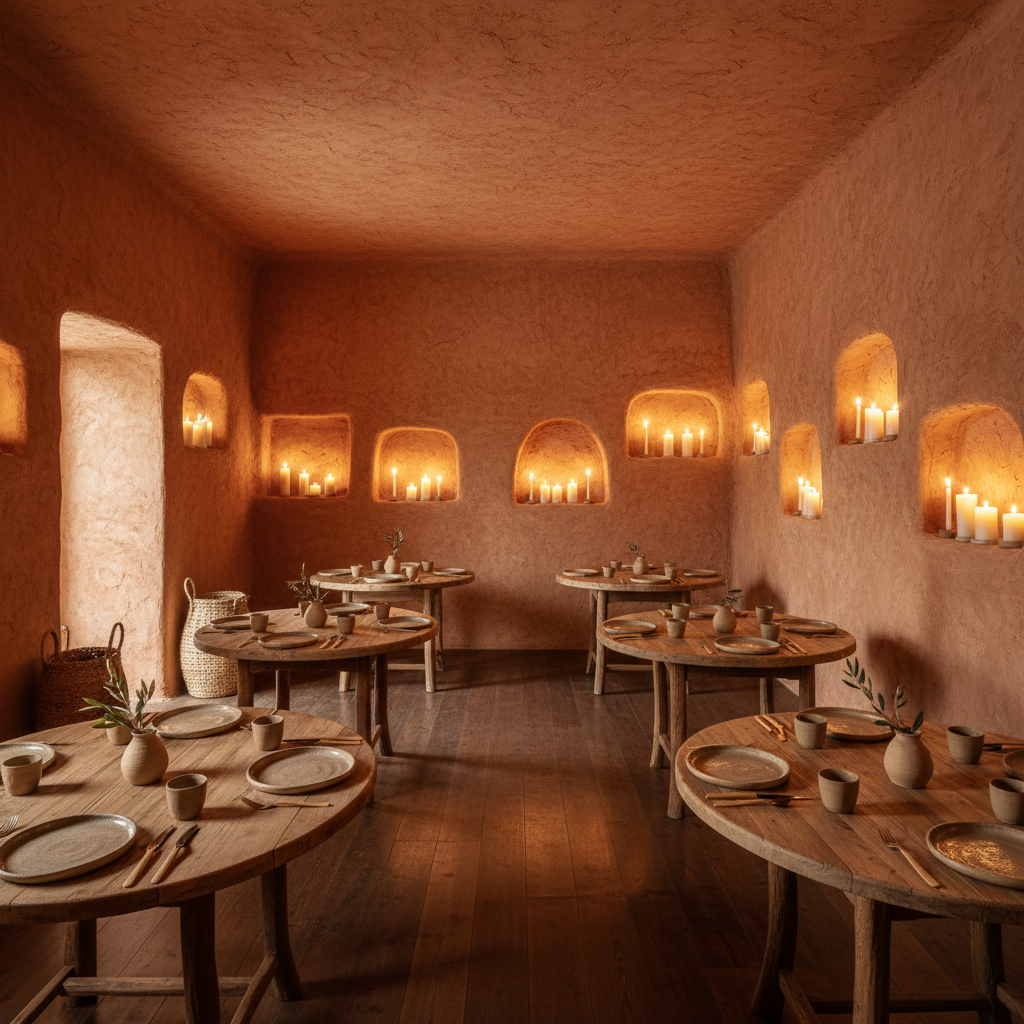
The room is ready. The question is when.
Reservations
Some evenings ask to be remembered.
Plara seats thirty-two guests each evening. We recommend booking at least three weeks in advance.
Tuesday – Sunday·Dinner from 6 PM·32 Covers